|
The following interview with Mark appeared in the online noir magazine Plots with Guns in October, 2000. Reprinted here with permission.
PWG: You've taken the PI form, as developed by Hammett and Chandler, and decorated it with the stuff of our own modern times—S&M bars, computers, virtual reality, etc. This works nicely, since most contemporary detectives have nutzo sidekicks and a guilty streak. What draws you to the hard-boiled tradition, and tell us about how you came to write The Immortal Game.
Mark Coggins: I came to writing mysteries because of my admiration for the work of Raymond Chandler. I was introduced to Chandler in my first creative writing class at Stanford—a class that was taught by Tobias Wolff.
Wolff was making the point that certain writers have a very unique style and he was reading from various works to back up his assertion. One of the things he read was the first chapter from The Big Sleep. I didn't know anything about Chandler before that reading, but I very much liked what I heard.
Later that week I went to the college bookstore and bought a copy of The High Window. I can't tell you now why I picked that instead of The Big Sleep but I did. I devoured the book and quickly ran through the rest of Chandler and all of Hammett too.
The next creative writing class I took was from Ron Hansen. In it, I wrote a short story in the hard-boiled tradition titled "There's No Such Thing as Private Eyes." I shopped the story around and a number of years later it was published in The New Black Mask, volume 4. The New Black Mask was a revival of the famous pulp detective magazine that gave Chandler and Hammett their start. It was edited by Richard Layman (one of Hammett's biographers) and published in trade paperback format by HBJ. As you might expect, I was very pleased that my first published story appeared in the same magazine that first published Chandler and Hammett.
The private eye in the short story—August Riordan—is the same character in The Immortal Game. In fact, The Immortal Game started out as a follow-on story for New Black Mask, but the magazine folded before the story was published.
Obviously, I expanded and revised the story considerably in the process of converting it to the novel form, but the link with "There's No Such Thing as Private Eyes" is still there: in the first chapter of the The Immortal Game, Riordan and his client discuss an event that happened in the short story.
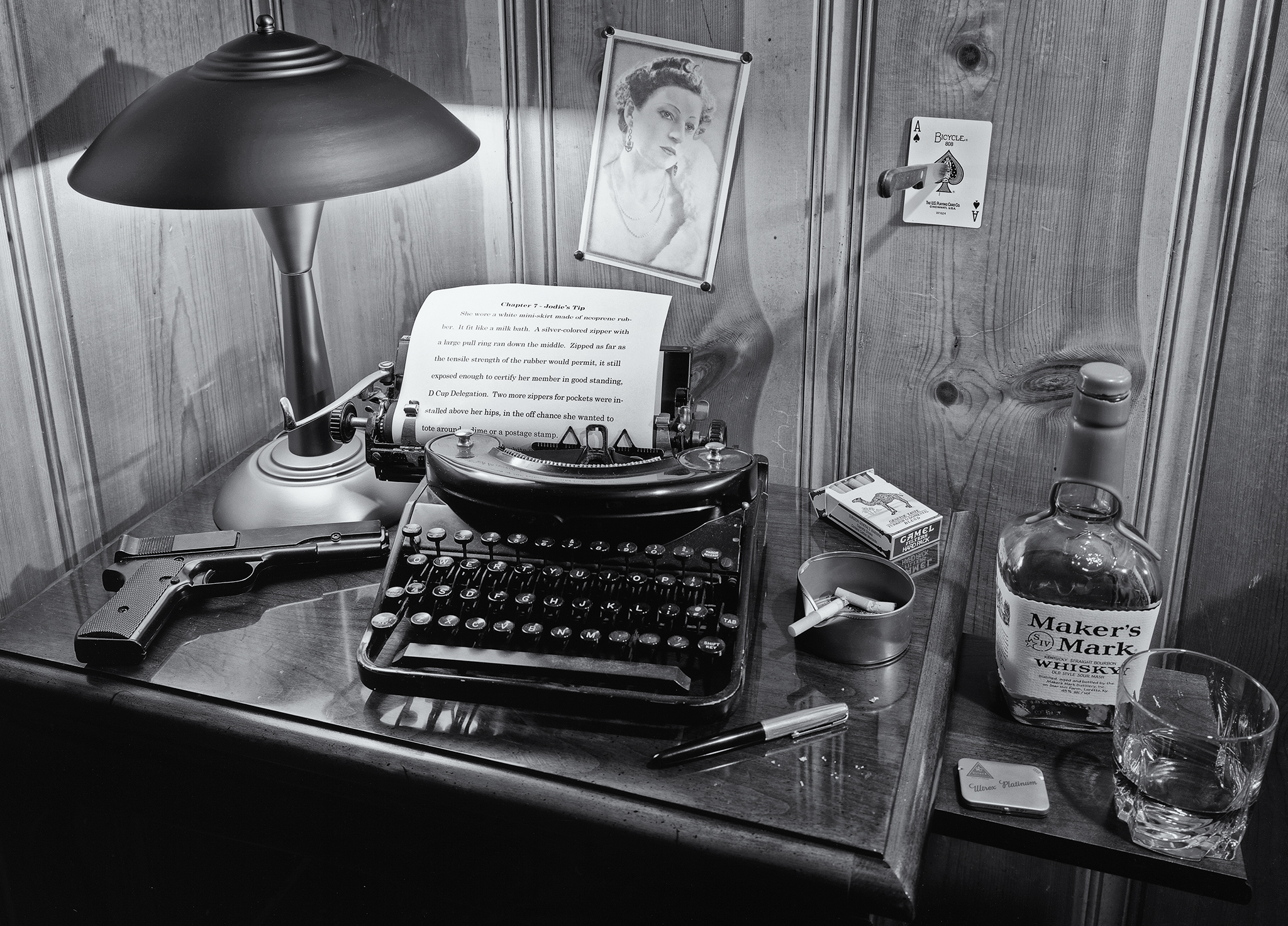
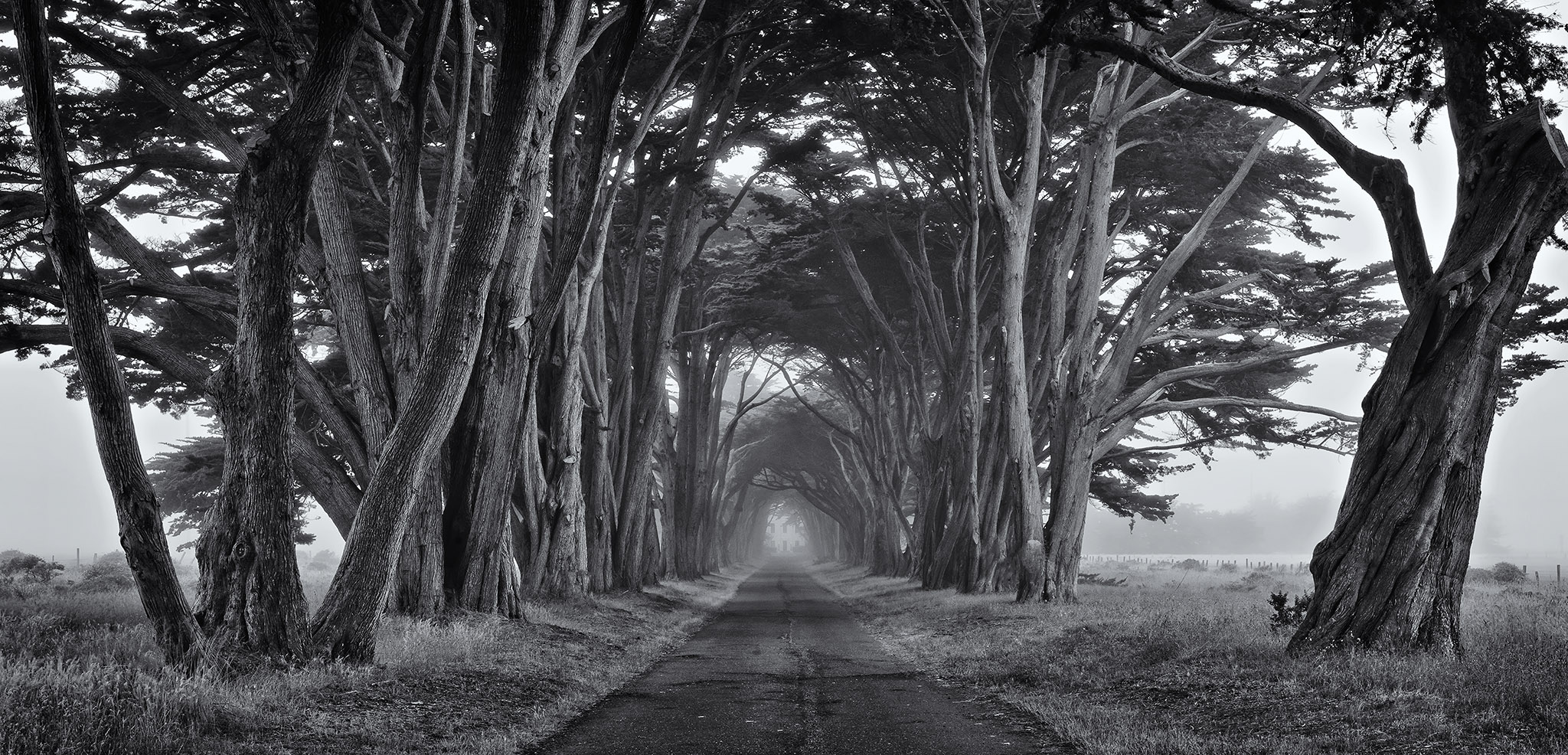
PWG: You're also a photographer, and your images appear at the beginning of each chapter, creating a wonderful mood for the volume. How do you think the images enhance the story?
MC: I was inspired by the North Point Press illustrated editions of The Big Sleep and The Maltese Falcon. Particularly in their edition of The Maltese Falcon, I thought the grainy contemporary photos of locales described in the book added a "noir-ish" mood to the experience of reading the book without being distracting. I think their edition of The Big Sleep is much less successful because the use of models to recreate scenes from the book does, in fact, distract the reader from the story.
As in the North Point Press edition of Falcon, I hope the photographs in The Immortal Game add a dark, noir-ish backdrop to the experience of reading the book. Since the novel and main character are, as you suggested in your first question, throwbacks to some extent, it seemed very appropriate to hearken back to the black and white noir cinema of the 40's and 50's.
Most of the photographs in the book were taken with a large format camera that required use of a tripod and considerable fuss and set up time. However, in looking over the finished volume, I realized that the images that seem to serve the mood the best were the grainy 35mm shots that were taken with little or no set up. The picture of shooting range or the window of the S&M leather store are two good examples.
Stretching the comparison with cinema a little further (perhaps past its breaking point!), use of hand-held cameras to set a mood in film might be a good analog to the success of the 35mm shots in the book.
PWG: One thing that certainly comes through in the novel is your love of San Francisco. Do you think the city is a "character" in the novel?
MC: I've been in writing groups where the question of a whether a locale or a city can be a character in a book has provoked some very heated exchanges. I understand the perspective of those who say a city can't be a character: cities don't have motives, make choices, engage in interior monologues--all the obvious things that define a character.
That said, one of the reasons that I admire the work of Chandler and Hammett so much is the way that they portrayed LA and San Francisco. When you read Chandler, in particular, you really feel like you understand what it was like to live in Southern California in the 30's and 40's. He's left behind a record of the city that photographs from the period, or even films, simply don't convey.
In writing The Immortal Game, I set out to provide as realistic a picture of life in contemporary San Francisco as I could. In fact, readers of early drafts of the book often red-lined sections where they felt I had gotten carried away with descriptions of the city and the people in it. I took some of these suggestions, but if I erred, I always erred on the side of retaining details about San Francisco rather than omitting them.
I guess the end result is that San Francisco, if not a character, is a well painted backdrop or setting in which the characters of the book interact. I suppose a comparison with stage plays wouldn't be too far off. Some plays are done with little or no props and very spartan sets; others are done with sets that mimic real life as much as possible. It's the choice of the director--or the writer in my case—to select the approach that serves the story the best.
PWG: So, August Riordan, bass-playing wise-cracking PI. How did he come to you, and how would you describe his narrative voice?
MC: As I've suggested, he is intended to be a throw-back to "golden age" detectives. In fact, as the title of "There's No Such Thing as Private Eyes" suggests, the idea behind the story is that someone like Riordan couldn't really exist in today's world.
Everything about Riordan flows from the idea that he is something of an anachronism: the place he lives, the car he drives, his interest in jazz and "antique" stereo equipment and his reluctance to come to grips with computers and high technology.
I would say that his narrative voice is the embodiment of his world view: jaded, cynical and tinged with a hard-bitten humor. He doesn't care what others think of him, and he makes the quips and fires off the come-back lines you think of thirty minutes too late or are too polite or reserved to actually vocalize.
PWG: Being a guitar player with a nice PRS Custom six-string electric, I felt for the guy when his "wife" was so brutally taken from him. Tell me about this guy's love of jazz, both listening to and performing.
MC: Your comment is an interesting one: a number of musicians have told me that they found the scene where Riordan loses his bass to be particularly troubling. In fact, I was contacted by a real jazz bass-playing private investigator who was convinced that I had based Riordan on him. What made it really errie was this guy had actually played gigs in a several of the clubs I mentioned in the book and his firm had been employed (unbeknownst to me) by a high technology company where I once worked.
But more to the point, the PI's big criticism of the book was that he felt Riordan would have reacted much more strongly to having his bass destroyed. He really wanted Riordan to go after Hastrup and Pace with a vengeance.
As I mentioned in the last question, Riordan's interest in jazz stems from the idea that he belongs to a different era. For the most part, the style of jazz that Riordan likes to play and listen to comes from the 30's, 40's and 50's.
As I'm not a musician myself, this one was of the most difficult aspects of the book to pull off. However, I had a lot of help from a friend of mine named Larry Berger, who is a real expert in 30's and 40's jazz Larry knows a number of famous jazz musicians, most notably jazz saxophonist Benny Carter, and has assisted in the studio on several of Carter's records.
Larry also helped with Riordan's antique hi-fi equipment, particularly with the description of the monster Altec Lansing speakers Riordan has in his living room. To top it off, the photo in front of chapter 15 is of Larry's wrist handcuffed to the speaker handle. In that sense, I guess you could say that Larry is the model for Riordan.
PWG: I've read that you've worked for several computer companies, and computer software is vital in this novel. But you write from August's point of view, and he admits to not knowing these things too well. Why did you decide to write it that way?
MC: Like many people who have a specialized knowledge in particular area, I'm frustrated when I see it portrayed inaccurately in books and films. I wanted high technology to be a key element of the story, but I wanted to convey it as accurately as I could in a way that was approachable to the average reader.
Having Bishop and Duckworth explain the technology to Riordan--who clearly is not comfortable with it--forced me to write about technology in a more straightforward, understandable manner. For example, a lot of people really don't understand exactly what source code is. I rewrote the section in chapter 4 where Duckworth explains source code to Riordan a number of times based on feedback I received from early readers who just weren't getting the concept. I didn't really get it right (or close to right) until I hit on the idea of comparing source code to sheet music.
PWG: Are you a big fan of detective fiction? Who do you read? What's right and wrong with the genre these days?
MC: I am a big fan of hardboiled detective fiction. I read and like Burke, Connelly, Crais, Crumley, Estleman, Gores, Lehane, Muller, Parker and Pronzini. Two guys who I also like, but I haven't seen much from lately, are Lewin and Valin. And although he's really not hardboiled, I very much enjoy Hillerman.
As to what's right and wrong with the genre (or perhaps just plain wrong), I think the balloting at this year's Bouchercon was very instructive. In addition to the Anthony awards given for current work, attendees were also supposed to vote on the best mystery novel and novelist for the 20th century. Even though several best novel lists of the 20th century put together by non-mystery organizations like the Modern Library included books by Chandler and Hammett, neither Chandler, Hammett, The Big Sleep or The Maltese Falcon won any award!
PWG: I'm a big fan of small presses, and have found some of the most daring and vital work in the crime field from these independent publishers. Why did you take The Immortal Game to Poltroon Press?
MC: Alastair Johnston, co-founder of Poltroon Press, is a friend of mine. He is well-known in the typography world for his lectures and critical writings, and in addition to being a writer and broadcaster of world music, is also a very well-respected book designer.
Poltroon doesn't normally publish mysteries, but I knew that Alastair would be receptive to the idea of illustrating the book with black and white photographs and to modeling the book design after that of the first edition of The Big Sleep. (Hold a facsimile copy of the Knopf edition--or a true first if you are lucky enough to own one--next to The Immortal Game and you will come to understand the basis for a number of the design decisions, including typeface, page imposition and size.)
A great deal of the success of the book—particularly with collectors—is due to Alastair's design and selection of high quality materials and book manufacturing processes. Even people who don't particularly like the writing have told me that they enjoy owning the book because it is such a handsome volume!
PWG: Will we see more of August Riordan in other works? What's next for you?
MC: There are more Riordan books in the works and I recently sold a short story to Ellery Queen Mystery Magazine. It will appear in the November, 2001 issue and the title of the story is "Ride a Red Dragon". It features a private detective named Vic Lane who operates in 1920's San Francisco.
|